

About me
Who I Am Now
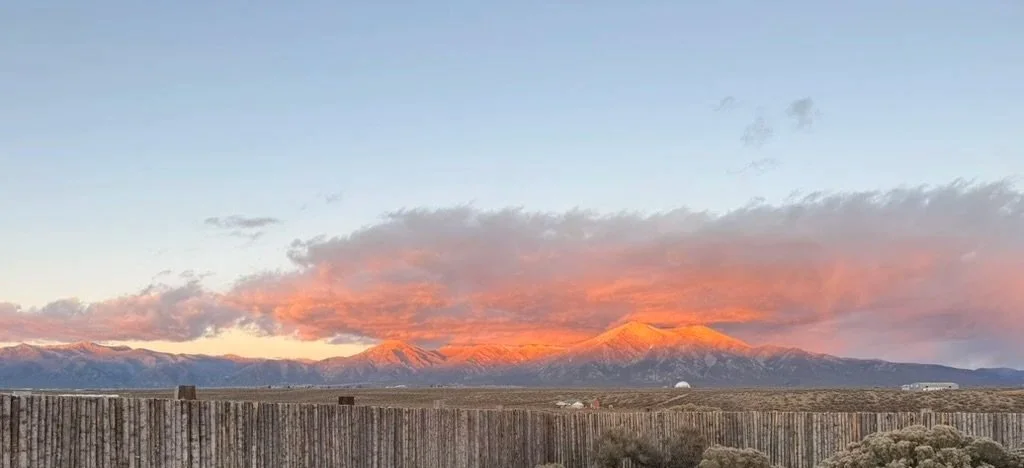
I’m Tracy. I’m originally a Colorado girl turned New Mexican as of 2014, and I live in Taos with my fiancé Patrick, two dogs, a cat, and a small menagerie of ducks and chickens. Family and community are central to my life. I love tending a garden, cooking for people I care about, moving my body through Pilates, yoga, volleyball, and dancing, and finding joy in music, travel, and small everyday moments of connection. I’m a big-time lover of all living things, and I feel deeply attuned to the interconnectedness between people, animals, and the natural world.
I care deeply about justice — dignity, belonging, and the belief that everyone deserves their basic human needs to be met. I’ve been a highly perceptive observer of the world around me for as long as I can remember; my parents describe this as one of my very first traits. I noticed early on how power and privilege shape who is seen, who is listened to and believed, who gets a seat at the table, who makes decisions, and who receives attention and care.
I’ve always carried both intensity and softness — determined and tenacious, but deeply compassionate. I’m attentive to both the good and the hard in the world, and I’ve long felt drawn toward participating in change rather than standing at a distance from it. That orientation led me to study public health, completing my Master of Public Health just before the accident — work that sharpened my understanding of healthcare systems, access, and inequity in ways that later became deeply personal.
Some parts of me have remained steady through everything: my devotion to family; my love of nature, adventure, animals, music, and movement; my curiosity about the world and about all of us living in it, our differences and similarities. Other parts have surprised me. I’ve learned the power of slowing down and the power of saying no. I’ve become much more attuned to my body and nervous system — through breathwork, meditation, somatic practices, and non-Western healing modalities I’ve explored for many years, long before I knew how much I would one day rely on them. At one point, I even considered becoming a practitioner myself, before confronting the reality that our failing systems often reserve these forms of care for the ultra-privileged, contradicting my belief that everyone is deserving.
I also grew up an athlete, especially through soccer — a space where my competitive drive, love of movement, and sense of sisterhood took shape. Some of my longest friendships and deepest bonds were formed there, and that athletic identity continues to influence how I relate to my body, challenge, and recovery.
Writing, too, has emerged more fully — a way of making meaning, sharing what I’ve lived, and discovering that my story resonates with others.
When I say “still standing,” I mean it both literally and symbolically. I survived something I was not expected to survive, and I am doing better than anyone — including myself — once imagined. That reality brings with it both gratitude and questions. Why am I still here? What am I meant to do with this life, this body, this second chance? I often think of trees when I think of resilience: deeply rooted, flexible, shaped by weather and time, still growing.
If you’re reading this while navigating your own long or quiet healing, I want you to know this:
You deserve to be here. You deserve the best care. You deserve to be advocated for — whether by yourself or by someone else. Your pain is real. Your experience is valid. You deserve to be heard, supported, and loved.
The Turning Point
In October 2022, my life changed abruptly after a serious accident involving a semi truck. I sustained multiple, severe head-to-toe injuries and entered a long, complex medical recovery that continues today. I was fortunate to survive — something many have described as unlikely — and to be doing as well as I am. The impact reshaped not only how my body functions, but also how I move through the world, including how I am seen, perceived, and treated.
What followed was not a neat arc of crisis and resolution, but years of surgeries, rehabilitation, advocacy, and learning how to live inside a body that no longer works or looks the way it once did. My understanding of disability deepened — not as an abstract concept, but as a lived reality intertwined with visibility, appearance, and shifting forms of privilege.
The experience exposed both the strengths and failures of our healthcare systems in deeply personal ways. Navigating care required persistence, support, and advocacy far beyond what anyone should reasonably need to access appropriate treatment. It also reshaped how I understand pain, access, and what long-term healing actually looks like.
This site began as a way to keep loved ones informed during the early months of recovery. Over time, it evolved into something more expansive: a record of survival, a space for reflection, and a platform for sharing what I’ve learned about resilience, systems, and the long middle that follows trauma.
The Long Middle
What followed the initial crisis was what I’ve come to think of as the long middle — the space after survival, when life doesn’t return to what it was, but also doesn’t pause neatly for healing. It’s where most of the work lives: physical, emotional, logistical, and existential.
Recovery, for me, has not been linear — it has meant ongoing medical care, multiple surgeries, long stretches of rehabilitation, and learning how to listen to a body that now speaks differently. It has also meant navigating uncertainty — about timelines, outcomes, pain, capacity, and how to build a meaningful life alongside limitations that don’t always resolve.
I’ve come to understand that the long middle isn’t something I will simply move through and leave behind. Ongoing care, monitoring, and adaptation will likely be part of my life moving forward — not as a crisis, but as a reality I now live alongside. This awareness has changed how I think about healing, progress, and what it means to build a sustainable life.
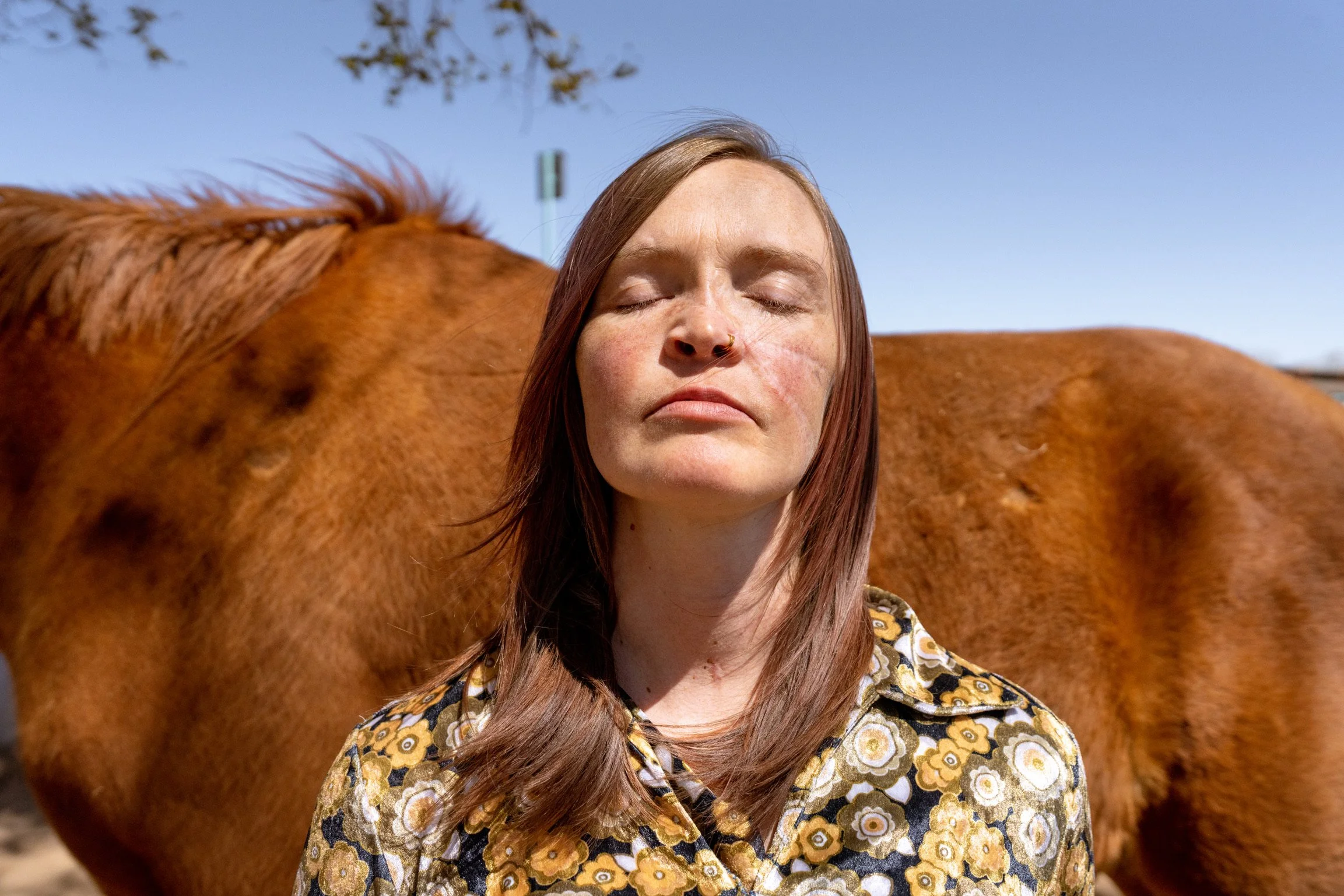
photo credit: Hayler Harper
The long middle has unfolded in chapters. One of them was legal — a lawsuit that didn’t fully resolve until October 2025, running in parallel with medical recovery and adding its own layer of stress, uncertainty, and endurance. Another chapter has been surgical. I’ve now completed all major surgeries we know of — twenty-one in total — marking the close of a significant phase of recovery, even as care and adaptation continue.
This season has also included the loss of work and financial stability. I have not been able to return to employment during this time, and despite sustained effort, I have not been successful in accessing meaningful assistance through state systems. That reality — often invisible — has shaped daily life just as much as the medical aspects of recovery, underscoring how deeply intertwined health, labor, and support structures truly are.
Throughout it all, this season has sharpened my understanding of advocacy. I’ve learned how much effort it takes to access appropriate care, how often systems fail people quietly, and how deeply inequities shape medical and economic outcomes. I’ve also learned the importance of community — of people who show up, ask questions, help carry the load, and remind you who you are when it’s easy to forget.
At the same time, the long middle has been a place of unexpected growth. Slowing down has changed how I relate to my body, my time, and my sense of worth. I’ve developed a deeper relationship with my nervous system, with rest, and with practices that support regulation and resilience. Writing has become a way to make sense of what I’m living, to name what’s hard, and to offer language to experiences that are often unseen.
I’m still here — still healing, still adapting, still learning how to live well in a body shaped by trauma. I don’t see this chapter as a detour or something to get through in order to arrive somewhere else. It’s part of my life now, one I’m meeting with curiosity, care, and a commitment to building something honest and sustainable.
Thank you for being here — however you arrived, and however long you choose to stay. I’m here, still learning how to live well — and this is where I share what I’m finding along the way.